Generative Engine Optimization (GEO): The 2026 Practical Guide
Generative engine optimization (GEO) is the work of making your pages easy for AI systems to find, use and cite when they write an answer. The term comes from a 2023 research paper, and in three years it has collected a lot of advice that ranges from well-supported to invented. This guide separates the two: what the original study measured, what the companies running AI search say in their own documentation, what large 2025-2026 studies found correlates with being cited, and a checklist built only from those sources.
Key Takeaways
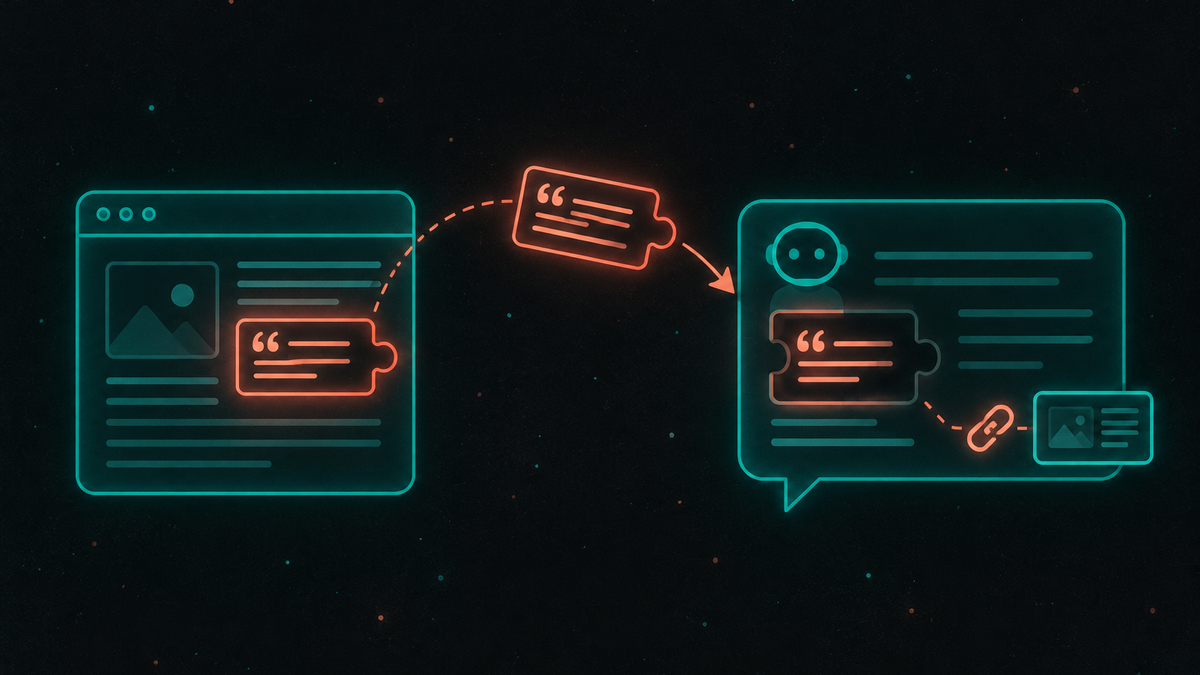
- The GEO paper (Aggarwal et al., accepted to KDD 2024) found that adding quotations, statistics and cited sources to a page raised its visibility in generative answers by 30-40% in their benchmark. Keyword stuffing performed worse than doing nothing.
- Google says there are no extra requirements for AI Overviews or AI Mode beyond being indexed and eligible for a snippet, and calls optimizing for generative AI search "still SEO." Since August 31, 2026, Search Console also has a Search generative AI control: sites are included by default, and excluding one removes it from AI Overviews and AI Mode.
- OpenAI, Perplexity and Microsoft each document concrete levers: allow the search crawler (OAI-SearchBot, PerplexityBot), keep content crawlable and fresh, and structure it so answers can be lifted cleanly.
- Ranking still matters, but less than it did. Ahrefs found 76% of AI Overview citations ranked in the top 10 in mid-2025; its March 2026 study measured about 38%.
- Brand mentions across the web correlate more strongly with AI Overview visibility than backlinks do (Ahrefs, 75,000 brands). Citation studies are correlations, not proof of cause.
What Is Generative Engine Optimization?
A generative engine is a search system that answers with written text assembled from sources: Google AI Overviews and AI Mode, ChatGPT search, Perplexity, Copilot. GEO is the practice of improving how often, and how prominently, your content is used in those answers. Wikipedia's definition is close to the paper's: improving visibility in responses generated by AI systems.
Two things make GEO different from classic SEO, even though most of the groundwork is shared:
- The unit of success is a citation or a mention inside an answer, not a position in a list of links. A page can rank fifth and still be the source an answer quotes.
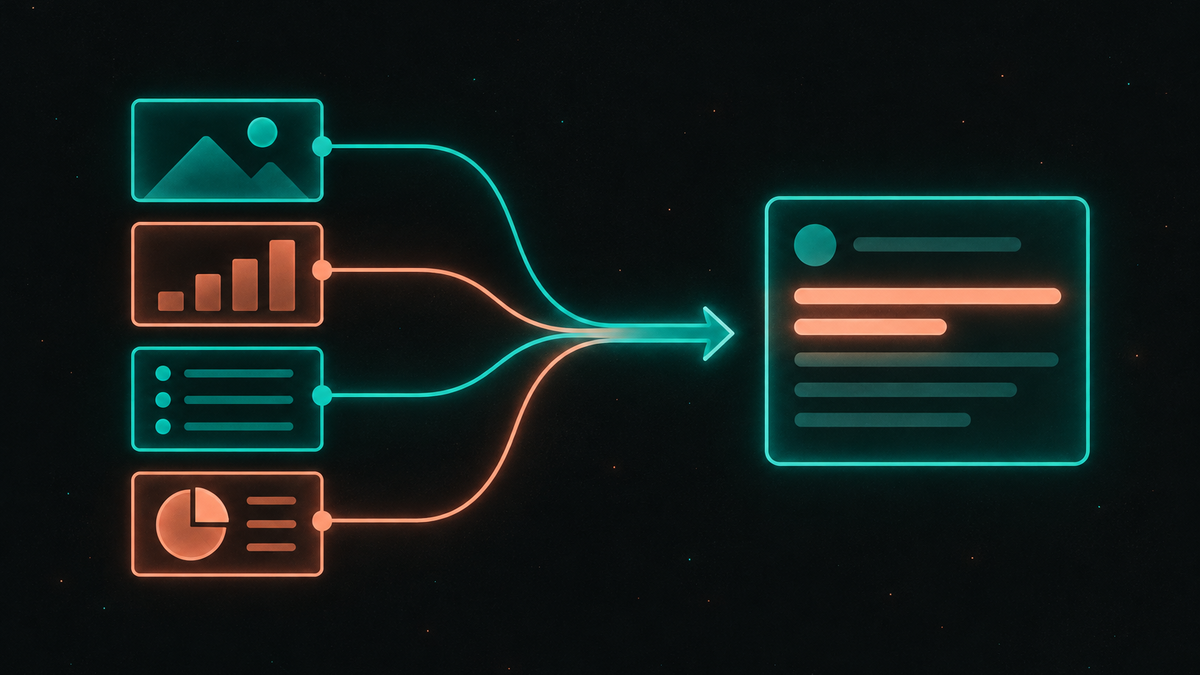
- The system reads your page and rewrites it. Content that states a fact plainly, near the top of a section, with a source, is easier to reuse than content that builds to its point over several paragraphs.
GEO vs AEO vs SEO
There is no settled vocabulary. AEO (answer engine optimization) and GEO are often used interchangeably. Wikipedia notes there is no consensus on the difference, and some vendors describe them as the same practice. Microsoft Advertising has used AEO for optimizing for assistants such as Copilot and GEO for generative search environments.
Google's position is the simplest: its guide to optimizing for generative AI features, updated in July 2026, names both terms and treats them as part of SEO. A practical way to think about it:
| Term | Main goal | Where success shows up |
|---|---|---|
| SEO | Rank in search results | Positions and clicks from the results page |
| AEO | Be the direct answer | Featured answers, voice and assistant responses |
| GEO | Be used and cited in AI-written answers | Citations and brand mentions in AI Overviews, ChatGPT, Perplexity |
The checklist below works for all three, which is the point Google keeps making. For a data-backed comparison of the two - clicks, citations, sources and measurement - see GEO vs SEO; for how language models learn from training data versus live retrieval, see LLM SEO.
What the Original GEO Research Found
The paper that named the field, GEO: Generative Engine Optimization, was written by researchers from Princeton, Georgia Tech, the Allen Institute for AI and IIT Delhi (per the first version) and accepted to KDD 2024. They built GEO-bench, a set of 10,000 queries, rewrote source pages with nine different methods, and measured how much of each generated answer came from the rewritten page, weighted by where in the answer it appeared.
Results on their main metric, against a baseline score of 19.5:
| Method | Score | Change |
|---|---|---|
| Quotation addition | 27.8 | +43% |
| Statistics addition | 25.9 | +33% |
| Fluency optimization | 25.1 | +29% |
| Cite sources | 24.9 | +28% |
| Technical terms | 23.1 | +18% |
| Easy-to-understand | 22.2 | +14% |
| Authoritative tone | 21.8 | +12% |
| Unique words | 20.7 | +6% |
| Keyword stuffing | 17.8 | -9% |
Three findings matter for practice:
- Evidence beats style. The top methods all add verifiable substance: a quote from a named person, a number, a citation. Changing tone or vocabulary helped far less.
- Keyword stuffing hurt. The authors report that traditional keyword tactics offered little to no improvement, and on their benchmark it scored below the unmodified page. On Perplexity it also came out about 10% worse than baseline.
- Lower-ranked pages gained the most. Adding cited sources lifted the visibility of the page ranked fifth by 115%, while the top-ranked page lost visibility. GEO is one of the few levers where a smaller site can catch up.
Keep the limits in mind: this is one benchmark, built in 2023, with rewritten pages in a controlled setup. It shows direction, not a guaranteed uplift on your site.
What the AI Search Providers Actually Say
The companies running these systems publish guidance. It is more concrete than most GEO advice suggests, and in one place they disagree.
Google (AI Overviews and AI Mode). Google's AI features documentation says there are no additional requirements and no special optimizations needed: a page has to be indexed and eligible to show with a snippet. It also says there is no special schema.org markup to add, and that SEO fundamentals continue to be worthwhile. The 2026 optimization guide adds that you do not need to break content into tiny pieces, write in a special way for AI, or create new machine-readable files - llms.txt included. What it does push is non-commodity content: unique, expert or experienced takes. If you want to limit what Google shows, the controls are the usual ones: nosnippet, data-nosnippet, max-snippet and noindex. The 2026 guide also says a site must be included in Search generative AI features in Search Console; per Google's help article, that control is set to include by default for every property, so it only matters if someone switched it off. Excluding a site removes its links and content from AI Overviews, AI Mode and generative AI features in Discover, but does not affect ranking or stop AI training - that is what Google-Extended is for.
OpenAI (ChatGPT search). OpenAI's crawler documentation is the most direct lever in GEO: sites opted out of OAI-SearchBot will not be shown in ChatGPT search answers. GPTBot is separate and only covers training, so you can block training and stay visible in search. Changes to robots.txt take effect in about 24 hours. Our ChatGPT SEO guide covers how ChatGPT search picks its sources.
Microsoft (Bing and Copilot). Microsoft's October 2025 guidance keeps crawlability, metadata, internal linking and backlinks as essentials, and asks for content that is fresh, authoritative and structured. It recommends specific H2 and H3 headings, Q&A formats, lists, tables, JSON-LD and one- to two-sentence answers to direct questions. It warns against walls of text, answers hidden in tabs, text inside images and core information locked in PDFs.
Perplexity. Perplexity's documentation recommends allowing PerplexityBot, which surfaces and links sites in its results and is not used to train models.
Where they disagree. Microsoft recommends chunked, Q&A-style content and structured data; Google says neither chunking nor special markup is required. Both can be true: clear headings and direct answers do not hurt in Google, and they help systems that lean on structure. What neither company asks for is content written for machines at the expense of readers.
What Correlates With AI Citations in 2026
Several large studies looked at which pages AI systems cite. All of them measure correlation, so treat them as signals, not rules.
- Rankings still help, but less every year. Ahrefs analyzed 1.9 million AI Overview citations in July 2025 and found 76% came from pages ranking in the top 10. Its March 2026 study of about 4 million AI Overview URLs put the top-10 share at roughly 38%, and links the drop to query fan-out: AI Overviews now pull from searches related to the one you typed.
- Brand mentions beat links. Across 75,000 brands, Ahrefs found that branded web mentions correlate with AI Overview visibility at 0.664, ahead of branded anchors (0.527), Domain Rating (0.326) and backlinks (0.218).
- Freshness, speed and authority show up for ChatGPT. SE Ranking's study of 216,524 pages cited by ChatGPT found content updated in the last three months averaged 6 citations versus 3.6 for older content, pages with a first contentful paint under 0.4 seconds averaged 6.7 citations versus 2.1 above 1.1 seconds, and sites with over 32,000 referring domains were about 3.5 times more likely to be cited. The same study found llms.txt had negligible impact.
A Practical GEO Checklist
Every item below traces back to the research or provider guidance above.
- Let the search crawlers in. Allow OAI-SearchBot, PerplexityBot and Claude-SearchBot in robots.txt; decide on training bots (GPTBot, ClaudeBot, CCBot) separately. Our AI Bot Access Rules check lists the rules for each.
- Serve your content in the HTML. Most AI crawlers do not run JavaScript, so content injected client-side is invisible to them. See which crawlers render JavaScript.
- Stay indexable and snippet-eligible in Google. A
nosnippetor restrictivemax-snippetlimits what AI Overviews can use, and the Search generative AI control in Search Console (Settings) has to stay on include. - Answer first. Put a one- or two-sentence answer directly under each question-style heading, then expand. Our answer passages and front-loading checks test exactly this.
- Add evidence: numbers, quotes, sources. These were the three strongest methods in the GEO study. Name the source of every statistic and link it. The Fact Density and Sources & References checks look for both.
- Write what only you can write. Google's non-commodity advice and the research agree: original data and firsthand experience give an answer a reason to cite you. We covered this in original research as an AI citation signal.
- Structure for reuse. Descriptive H2 and H3 headings, lists for steps, tables for comparisons. No answers hidden in tabs or images.
- Keep it fresh and fast. Update important pages when the facts change and show the date; keep load times low.
- Earn mentions, not just links. Being discussed by name on other sites correlated more strongly with AI visibility than backlinks did.
- Skip the shortcuts. Keyword stuffing lost visibility in the GEO study, Google says no special markup or AI files are needed, and llms.txt showed no citation effect. Spend the time on items 1-9.
How to Measure GEO
No single report covers every engine yet, so combine these views:
- Search Console counts AI Overview and AI Mode traffic in the regular Performance report (Web search type), and since mid-2026 has a separate Generative AI performance report (announced in June, rolled out to all sites by August 31) with impressions by page, country and device. Rankings remain a leading indicator.
- Bing Webmaster Tools has an AI Performance report (public preview since February 2026) that counts how often Copilot and Bing's AI summaries cite your pages.
- Server logs show whether OAI-SearchBot, PerplexityBot and Claude-SearchBot actually fetch your pages, and how often.
- AI visibility tools (for example Ahrefs Brand Radar or Semrush's AI Visibility Toolkit) track how often assistants mention your brand for a set of prompts.
Our guide to measuring AI visibility walks through each of these. A page-level audit, like the one Hybrid Ranking runs, sits underneath all of them: it tells you whether a specific page can be fetched, understood and quoted, and what to change if it cannot.
Sources
- GEO: Generative Engine Optimization - Aggarwal et al., arXiv 2311.09735 (KDD 2024)
- AI features and your website - Google Search Central
- Guide to optimizing for generative AI features - Google Search Central
- Search generative AI control - Google Search Console Help
- Overview of OpenAI crawlers - OpenAI
- Optimizing your content for inclusion in AI search answers - Microsoft Advertising, Oct 2025
- Perplexity crawlers - Perplexity docs
- 76% of AI Overview citations come from the top 10 - Ahrefs, Jul 2025
- AI Overview citations from the top 10 - Ahrefs, Mar 2026
- AI Overview brand correlation - Ahrefs, May 2025
- How to optimize for ChatGPT - SE Ranking, Nov 2025
- Generative engine optimization - Wikipedia